

TEF and TCF compréhension écrite is the reading section of Canada’s two French proficiency exams — and it’s the section most students underestimate. You can read French, so how hard can a reading test be?
Harder than you’d expect. Both the TEF compréhension écrite and the TCF compréhension écrite test whether you can extract specific information under serious time pressure — not whether you “understand French” in general.
The good news? Reading is the most strategy-dependent section of both exams. The right techniques can boost your score significantly without changing your French level. Here’s everything you need to know about both.
—
 TEF and TCF Compréhension Écrite: How Each Exam Works
Both exams give you 60 minutes of reading comprehension — but the format differs significantly.
The TEF gives you 50 multiple-choice questions divided into three sections, each targeting a different reading skill:
Scoring: 0 to 360 points. For CLB 7, you need 233-248 points.
The TCF takes a completely different approach: 39 questions in a single continuous test that scales from beginner to near-native difficulty.
Scoring: 100 to 699 points. For CLB 7, you need 453-498 points. It’s completely normal to not finish — the C1-C2 questions are designed for near-native speakers.
TEF vs TCF Reading: Side-by-Side Comparison| Feature | TEF | TCF |
|---|---|---|
| Duration | 60 minutes | 60 minutes |
| Questions | 50 | 39 |
| Structure | 3 sections (A, B, C) | Progressive difficulty (A1→C2) |
| Scoring | 0–360 points | 100–699 points |
| CLB 7 threshold | 233–248 points | 453–498 points |
| Wrong answer penalty | None | None |
| Biggest challenge | Time pressure (72 sec/question) | Difficulty ramp (C1-C2 texts) |
Neither exam penalizes guessing. Never leave a question blank — even a random pick gives you a 25% chance.

Want to see what the actual questions look like? Try our free TEF & TCF sample tests with real-format practice questions for both exams.
Question Types on Both TEF and TCF ReadingBoth exams test the same four core reading skills — just packaged differently. Here’s what to expect and how to handle each type.
Where it appears: TEF Section A + TCF questions 1-13
Find a specific piece of information — a date, price, name, or condition. Sounds simple, but the text often includes similar-looking details designed to mislead you.
Strategy: Read the question before the text. Know what you’re hunting for, then scan. Don’t read word by word.
Where it appears: TEF Section B + TCF questions 14-20
What’s this text for? Who’s it aimed at? You’ll see brochures, formal letters, public notices, instructions.
Strategy: Check the format before reading the content. A formal letter has a greeting and closing. An advertisement has a call-to-action. A notice uses imperatives. The visual structure reveals the purpose.
Where it appears: TEF Section C + TCF questions 20-30
The answer isn’t stated directly — you need to read between the lines. What does the author imply? What conclusion follows logically?
Strategy: Eliminate obviously wrong answers first. Then ask: which remaining option is supported by the text vs. which one adds information that isn’t there?
Where it appears: TEF Section C (late questions) + TCF questions 30-39
The hardest category on both exams. You’ll read opinion pieces, editorials, or debates and answer questions about the author’s position, supporting arguments, or counterarguments.
Strategy: Identify the thesis in the first paragraph. Track the argument: claim → evidence → counterpoint → conclusion. Questions almost always target one of these four elements.

Time Management for TEF and TCF ReadingHere’s the honest truth — time management is what separates a CLB 5 score from CLB 7 on the reading section of both exams. The French isn’t always hard. The clock is.
50 questions in 60 minutes = roughly 72 seconds per question. But not all questions deserve equal time:
39 questions in 60 minutes = roughly 90 seconds per question. More time per question, but the difficulty ramps dramatically:
Golden rule for both exams: Never spend more than 2 minutes on any single question. If you’re stuck, mark your best guess, flag it, move on. Come back with remaining time.
Common Reading Traps on TEF and TCFAfter helping 4,000+ students prepare for TEF and TCF, our native French teachers have seen the same mistakes again and again on compréhension écrite.
The biggest time killer on both exams. Students who mentally translate every sentence into English run out of time before the hard questions. You need to read in French, think in French — even when it feels uncomfortable.
Some wrong answers use words that appear in the text but don’t actually answer the question. The examiners on both TEF and TCF know you’ll be drawn to vocabulary you recognize. Always verify: does this answer the specific question being asked?
TEF Section A and early TCF questions are genuinely straightforward. If a sign says “Fermeture à 18h” and the question asks what time the store closes — the answer is 6 PM. Don’t second-guess yourself. Bank that time for harder sections.
Words like ne…pas, ne…plus, ne…jamais, sauf, à condition que, and malgré completely flip meaning. One missed negation = one wrong answer on either exam. Circle these words the moment you spot them.
—
Building Reading Speed for TEF and TCFYou can’t cram reading speed the week before either exam. This is a skill that builds over months of consistent practice. Here’s what works for both TEF and TCF preparation:
Even 15 minutes a day makes a measurable difference. Start with Radio-Canada, Le Devoir, or France 24. Read the headline, the first paragraph, and summarize the main point — in French, not English.
Once a week, do a full 60-minute timed reading section — not individual questions, the whole block. This trains your pacing instincts for either exam format. Start with our TEF Canada sample test collection which includes reading practice questions.
After each practice session, don’t just check the score — understand every wrong answer. Was it a vocabulary gap? A misread question? Time pressure? Each type of mistake needs a different fix.
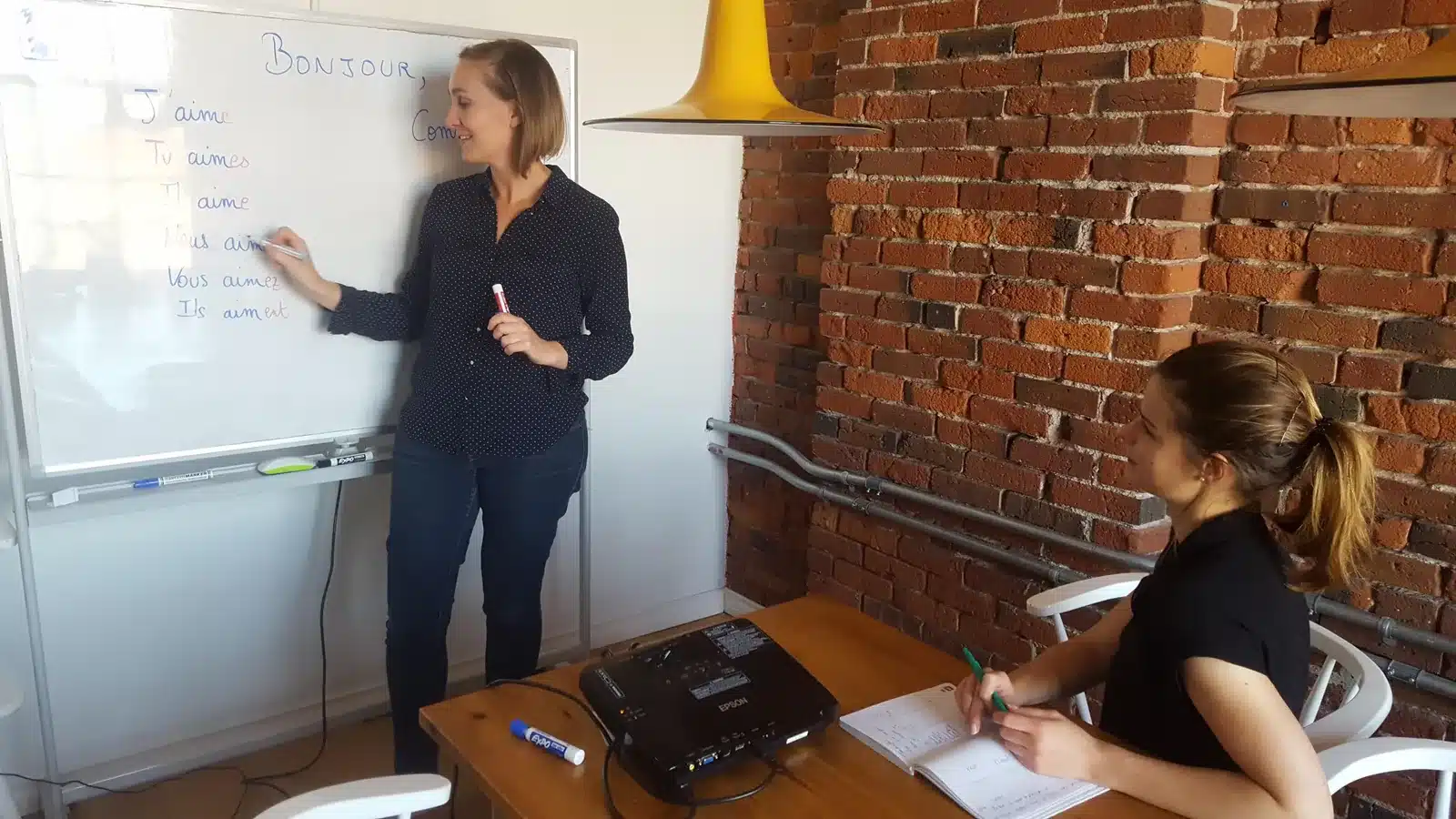
How We Prepare You for TEF and TCF ReadingMost students overlook the reading section — they assume they can handle it. Our TEF/TCF Prep course dedicates specific class time to compréhension écrite because strategy matters as much as your French level.
Here’s what reading preparation looks like:
95% of our students pass their TEF or TCF on the first attempt. All of our teachers are native French speakers from France and Quebec who’ve guided over 4,000 students through these exams.
Starting from zero? The 12-month TEF for Beginners program takes you from absolute beginner to exam-ready — 6 months of French foundations followed by 6 months of focused TEF or TCF exam prep.
—
Have Questions? Connect with LilyNot sure which program fits your current level? Have questions about the reading section or exam registration?
Lily, our Growth Director, helps students figure out the right path every day. Reach out directly:
Or join our free weekly Masterclass (every Thursday, 6-7 PM PST) to ask questions live about TEF, TCF, or your learning path.
—
Frequently Asked Questions—
Your Next StepThe reading section rewards strategy more than any other part of the TEF or TCF. Start building daily French reading habits now — even 15 minutes of news adds up.
When you’re ready for structured preparation with native French teachers who’ve guided 4,000+ students through these exams, we’re here. Rated 200+ reviews at 5.0 stars — in-person in Vancouver and online across Canada.
Preparing for the speaking section too? Read our TEF & TCF Expression Orale guide for the same strategy-first approach.