

Your first French class as a beginner can feel intimidating, and if you’re reading this, you’re probably wondering whether you’ll be the only one who doesn’t know a single word, whether the teacher will put you on the spot, or whether you’ll embarrass yourself in front of strangers. We get it. And we hear these exact concerns from new students every single week.
Here’s what we want you to know upfront: every one of our 4,500+ students started exactly where you are right now. That nervous feeling? It’s completely normal. But it also disappears faster than you’d expect, usually within the first 15 minutes.
This guide walks you through exactly what happens in your first French class in Vancouver, from the moment you walk in to the moment you leave. No surprises, no sugar-coating, just an honest look at what to expect so you can show up feeling prepared instead of anxious.
What Should You Bring to Your First French Class?
Let’s start with the practical stuff, because worrying about logistics on top of first-day nerves doesn’t help anyone.
| Detail | What to Expect |
|---|---|
| Class length | 90 minutes per session |
| Frequency | 2 classes per week |
| Group size | Max 14 students (usually 8–12) |
| Teacher | Native French speaker from France or Quebec |
| Language in class | English + French (NOT immersion at Level 1) |
| French level required | Absolute zero, no prior knowledge needed |
| Format | In-person (Gastown, Vancouver) or live online |
What to Bring
- A notebook and pen. Yes, old school. Writing by hand helps your brain retain new vocabulary better than typing, and you’ll want to jot down phrases as you hear them.
- Your phone (on silent). You’ll use it occasionally to look things up, and some exercises involve recording yourself. But keep it face-down during class.
- Water. Speaking a new language is surprisingly tiring. Your mouth is literally making shapes it’s never made before.
- An open mind. Seriously. The students who progress fastest are the ones who let go of perfectionism on day one.
What NOT to Worry About
- Don’t study beforehand. Level 1 literally starts from zero: bonjour and je m’appelle. If you already knew French, you wouldn’t be in this class.
- Don’t worry about your accent. Every accent in every language sounds “off” at the beginning. Your teacher has heard it all, and nobody in your class is going to judge you.
- Don’t bring a textbook. We provide all the materials. Save your money for croissants after class.
What Happens in the First 10 Minutes?
This is the part everyone wonders about. Here’s exactly how it goes:
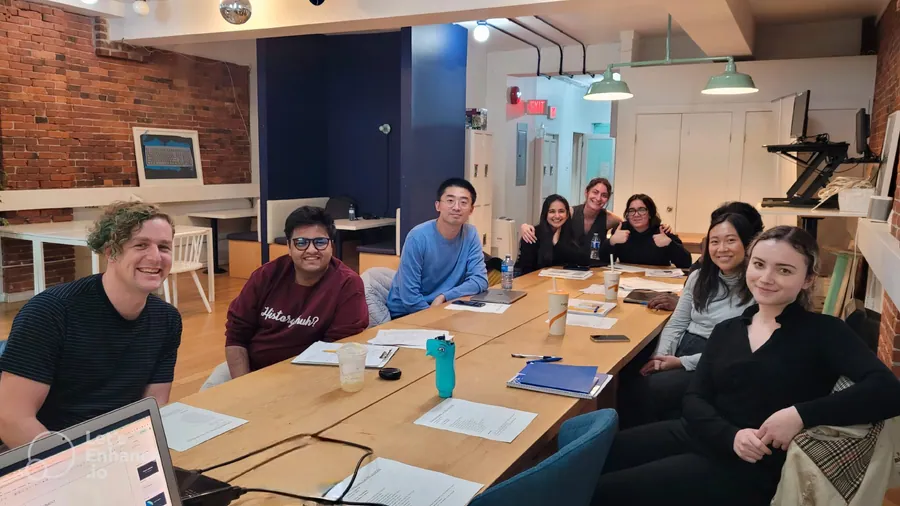
You walk into the classroom, or log into Zoom if you’re joining online, and you’ll see a small group of 8–12 other adults who look exactly as nervous as you feel. That’s not a joke. First-class energy is always a mix of excitement and quiet panic.
Your teacher, a native French speaker from France or Quebec, will welcome everyone in English first. They’ll introduce themselves, explain how the class works, and set one ground rule that matters: there are no stupid questions, and making mistakes is how you learn.
Then, within the first 10 minutes, something magical happens: you say your first words in French.
It’ll be something simple, “Bonjour, je m’appelle Sarah”, and your pronunciation won’t be perfect. But neither will anyone else’s. And the moment you hear the person next to you stumble over the same sounds you did, that knot in your stomach starts to unravel.

What Is Your Teacher Actually Like?
This is a big one. Many beginners picture a stern French professor who’ll scold them for bad pronunciation. That’s not how this works.
Our teachers are native French speakers from France and Quebec, not textbook instructors reading from a script. They’re warm, patient, and genuinely enthusiastic about watching beginners discover French for the first time. Most of them have been teaching for years and have seen every type of learner imaginable.
What makes a great beginner French teacher:
- They speak slowly and clearly. No one is going to fire rapid French at you on day one.
- They use English when needed. Level 1 isn’t immersion. Your teacher will explain concepts in English, then practice them in French.
- They correct gently. When you make a pronunciation mistake, they’ll model the correct version, not point out what you did wrong.
- They create a safe space. The best French teachers know that confidence matters more than grammar in the first few weeks.
“I was so nervous about my first class — I literally almost cancelled. But the teacher made everyone feel so comfortable from minute one. By the end of the class, I was actually laughing and having fun. Wish I hadn’t waited so long to start!”
Who Else Is in the Class? You Might Be Surprised
One of the biggest fears beginners have is being “the worst one.” So let’s clear this up: everyone in a Level 1 class starts from zero. That’s literally the point.
Here’s who you’ll typically find sitting next to you:
- Immigration candidates preparing for TEF or TCF exams to boost their Express Entry profile. They need CLB points and are starting from scratch
- Professionals who want French for career advancement, especially in government or bilingual workplaces
- Partners and spouses of Francophones who want to communicate with their in-laws (this one comes up more than you’d think)
- Lifelong learners who’ve always wanted to learn French and finally decided to do it
- People who “took French in high school” but remember absolutely nothing, and are starting fresh with zero ego about it
The age range is typically 25 to 55, with a huge mix of nationalities and backgrounds. What they all have in common: they don’t speak French yet. That’s why they’re in Level 1.
And here’s something most people don’t expect: the other students become your biggest support system. There’s a unique bond that forms when a group of adults collectively butcher French pronunciation together for the first time. It’s awkward, it’s funny, and it creates a camaraderie that keeps people coming back.
What Does ‘Level 1’ Actually Cover?
You don’t need to know anything. Not a single word. Level 1 assumes complete zero.
By the end of Level 1 (roughly 8 weeks of classes, two 90-minute sessions per week), here’s what you’ll be able to do:
- Introduce yourself: name, nationality, profession, where you live
- Order food and drinks: at a café, restaurant, or bakery (in French, naturally)
- Ask and answer basic questions: time, directions, prices, simple preferences
- Use present tense verbs: être, avoir, aller, faire + regular -er verbs
- Count, tell time, and describe your daily routine
- Understand simple spoken French when spoken slowly and clearly
That might not sound like much on paper, but going from zero to ordering coffee in French in 8 weeks is a real accomplishment, and it gives you the foundation everything else builds on.

Your First Speaking Exercise: Yes, Everyone Sounds Awkward
Let’s address the elephant in the room: you will speak French in your very first class. Not in week 3. Not when you “feel ready.” In the first class.
But here’s how it actually works. It’s not what you’re imagining.
Your teacher won’t ask you to deliver a speech. Instead, you’ll do pair exercises: turning to the person next to you and practicing a simple exchange:
“Bonjour, je m’appelle [your name]. Et toi?”
“Je m’appelle [their name]. Enchanté(e)!”
That’s it. Four words plus your name. And you’ll practice it 2–3 times with different partners until it feels natural.
What most people don’t realize: the “awkward” phase lasts about 2–3 classes, not 2–3 months. By the third session, you’ll be introducing yourself, asking basic questions, and actually understanding the responses, without thinking about it in English first.
The key insight from our 200+ reviews at 5.0 stars: students consistently say the speaking practice in class is what made the biggest difference. Reading French in a textbook is one thing. Hearing yourself say it, and being understood, is something entirely different.
How Much Homework Should You Expect?
Let’s be realistic. You’re an adult with a job, a commute, and probably a dozen other commitments. So how much time does French actually take outside of class?
- Classes: 2 sessions per week × 90 minutes = 3 hours in class
- Homework: 20–30 minutes per session = about 1 hour per week
- Optional self-study: 15–20 minutes daily of podcasts, apps, or flashcards = the secret accelerator
So the realistic commitment is 4–5 hours per week: roughly the length of a long movie plus a TV episode. Most students find it manageable even with full-time jobs.
The homework isn’t busywork either. It typically involves short exercises that reinforce what you learned in class: writing a few sentences, listening to a short audio clip, or reviewing vocabulary with flashcards. Nothing that requires sitting at a desk for hours.
For more ideas on how to fit French into your daily life in Vancouver, check out our guide to practicing French in Vancouver.
When Will You Start Feeling Confident?
This is the question every beginner wants answered, and the honest answer might surprise you.
Most students feel a noticeable shift around weeks 3–4. Not fluency. That takes months. But a quiet confidence that comes from realizing: “Wait, I actually understood what the teacher just said without translating in my head.”
Here’s the typical timeline based on what we see with our students:
- Week 1: Nervous, excited, everything feels new. You’ll remember about 50% of what you learned.
- Week 2–3: Things start clicking. You recognize patterns. The sounds start making sense.
- Week 4–5: The confidence shift. You catch yourself thinking in French fragments. You order coffee in French and the barista understands you.
- Week 6–8: You’re having mini-conversations. Simple ones, but real ones. The fear is gone.
The students who progress fastest share one trait: they’re not afraid to sound bad. They speak up in class, make mistakes, get corrected, and try again. The ones who hold back, waiting until they’re “ready”, tend to plateau. The speaking practice is the engine. Use it.
“Best investment I made for my PR application. The teachers really understand what IRCC expects and prepare you accordingly. I went from complete zero to CLB 7 in under a year.”
How to Choose Your First Class in Vancouver
We offer several ways to start, depending on your goals and schedule:
| Program | Duration | Format | Best For |
|---|---|---|---|
| French Transformation | 6 months | Group (max 14) | Learning French for life, career, or travel |
| TEF for Beginners | 12 months | Group (max 14) | Canadian PR, need CLB 7 for Express Entry |
| Private Classes | Flexible | 1-on-1 | Custom pace, specific goals, irregular schedule |
Group Classes (Most Popular for Beginners)
Our French Transformation program takes you from complete zero through 6 progressive levels over 6 months. Two classes per week, 90 minutes each, max 14 students per group. Available in-person in Vancouver (Gastown) or online.
If your goal is Canadian PR, our TEF for Beginners program extends the journey to 12 months, covering all 6 levels plus dedicated TEF/TCF exam preparation. Same class format, same teachers, but with the exam strategy built in from the start.
Private Classes (Flexible & Personalized)
Prefer one-on-one attention? Private classes let you move at your own pace with a dedicated native French teacher. You choose the schedule, the focus, and the intensity. Ideal for students with specific goals or irregular availability.
Online Option
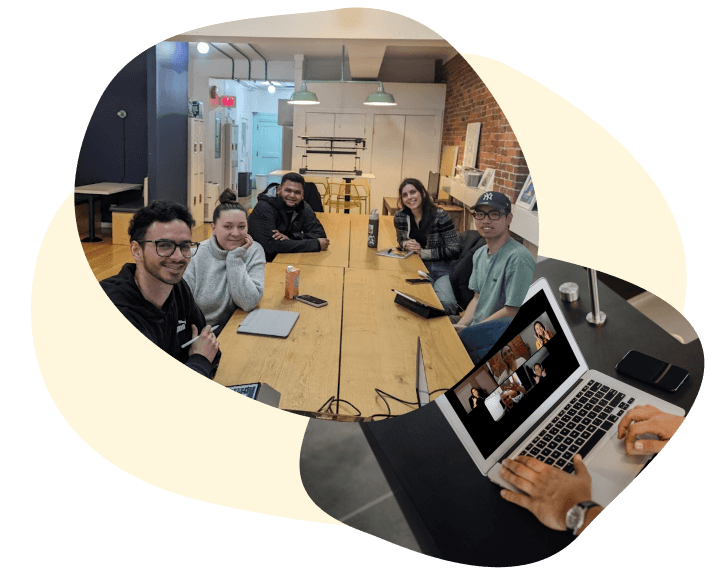
Can’t make it to our Vancouver classroom? Every class is available online through live video: same teacher, same group size, same curriculum. Many students actually prefer online because they can attend from anywhere in BC without a commute.
For a sense of where this journey can lead, take a look at our TEF Canada sample test: that’s what our students work toward by the end of the program.