
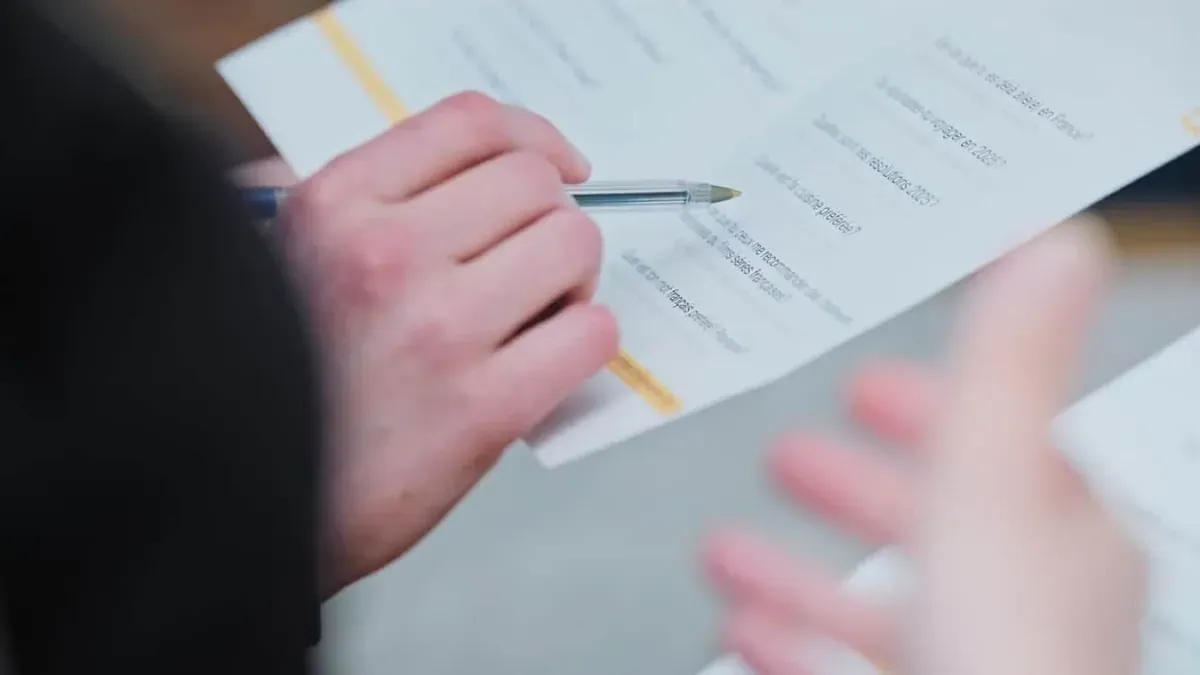
TEF Expression Orale Section A is a 5-minute phone role-play: you call about an ad and ask the examiner about ten questions to get the details you need. Good marks come from polite, varied questions and from reacting to each answer, so you sound like a real caller and not like someone reading a list.
How does TEF Expression Orale Section A work?
Section A is a phone call you make to the examiner, who plays the person behind an ad. The official TEF Canada presentation from Le français des affaires, the test owner, gives it 5 minutes and names the task obtenir des renseignements (get information).
The ad can be a general advertisement, a classified ad, a job offer or a leisure activity. The prompt ends with a clear instruction: Posez une dizaine de questions (ask about ten questions).
| Section A | Section B | |
|---|---|---|
| Time | 5 minutes | 10 minutes |
| Official task | Obtenir des renseignements (get information) | Argumenter pour convaincre (argue to convince) |
| What you do | Phone about an ad and ask questions | Argue to convince the examiner |
Expression orale is one of the four mandatory tests of the TEF Canada, and IRCC lists TEF Canada as an accepted French test for Express Entry. For both sections side by side, read the TEF speaking test format in our main speaking guide.
What examiners listen for in Section A
Examiners want to hear you get real information in polite, varied French while you react to what they say. The test owner's prep page asks you to ask questions or reformulate the answers to get more detail, and to vary your vocabulary while keeping it suited to the situation.
In practice, a strong call shows five things:
- Task done: about ten useful questions a real caller would ask.
- Interaction: you react to each answer and follow up.
- Range: different question forms and words (prix, tarif, coût).
- Register: vous, a proper greeting, a polite goodbye.
- Clarity: a steady rhythm the listener can follow.
The official prep page also explains that the speaking test is always recorded so it can be marked twice. Your call is heard more than once, so clear speech matters more than speed.
Model answer: a full Section A call in French
A strong Section A call has four parts: a greeting with your reason for calling, about ten questions, a few reformulations and a polite close. The call below uses a practice ad written in the exam style, not an official prompt.
The prompt
Vous lisez cette annonce dans un journal local. Vous téléphonez pour avoir plus d'informations. Posez une dizaine de questions. Sorties en kayak de mer à Vancouver. Débutants bienvenus. Équipement fourni. Petits groupes. Réservation par téléphone.
1. Open the call
- Bonjour, je vous appelle au sujet de votre annonce pour les sorties en kayak de mer. (Hello, I'm calling about your ad for the sea kayaking trips.)
- Vous auriez quelques minutes pour répondre à mes questions ? (Would you have a few minutes to answer my questions?)
- Je suis débutant (ou débutante) et j'aimerais avoir quelques précisions avant de réserver. (I'm a beginner and I'd like a few details before booking.)
Three short lines give the examiner your reason, your situation and your register. That's a real phone call, and it sets up everything you ask next.
2. Ask about ten questions
| # | You ask | In English | Why it works |
|---|---|---|---|
| 1 | Quand est-ce que les sorties ont lieu ? | When do the trips take place? | Starts with the basics, est-ce que form |
| 2 | Combien de temps dure une sortie ? | How long does a trip last? | Combien de temps, a different question word |
| 3 | Quel est le prix d'une sortie, et qu'est-ce qui est compris dans ce tarif ? | What does a trip cost, and what does that rate include? | Builds on équipement fourni instead of repeating it |
| 4 | Faut-il savoir nager ou avoir déjà fait du kayak ? | Do I need to swim or have kayaked before? | Inversion, a formal touch |
| 5 | D'où partent les groupes, et est-ce qu'il y a un parking à proximité ? | Where do groups leave from, and is there parking nearby? | A main question plus a natural follow-up |
| 6 | Combien de personnes y a-t-il par groupe, au maximum ? | How many people per group, at most? | Checks the vague petits groupes in the ad |
| 7 | Qu'est-ce qui se passe s'il pleut ou s'il y a trop de vent ? | What happens if it rains or it's too windy? | A si clause, a real caller's worry |
| 8 | Est-ce que je dois apporter des vêtements particuliers ? | Do I need to bring special clothes? | Practical, invites a longer answer |
| 9 | Pourriez-vous m'expliquer comment on réserve et comment on paie ? | Could you explain how to book and pay? | Polite conditional, indirect question |
| 10 | Si je viens avec deux amis, est-ce que vous proposez un tarif de groupe ? | If I come with two friends, do you offer a group rate? | Shows initiative, opens a small negotiation |
3. Reformulate the answers
Reformulating proves you understood and pulls out more detail. Here's how it sounds after three of the answers:
- Examinateur : Une sortie dure trois heures, avec une pause au milieu.
Vous : D'accord, donc si je comprends bien, on passe à peu près deux heures et demie sur l'eau, c'est bien ça ? (So if I understand correctly, we spend about two and a half hours on the water, is that right?)
- Examinateur : C'est quatre-vingt-dix dollars par personne.
Vous : Quatre-vingt-dix dollars par personne, d'accord. Et le gilet de sauvetage, il est compris dans ce prix ? (Ninety dollars per person, OK. And is the life jacket included in that price?)
- Examinateur : On part du port, près du centre-ville.
Vous : Du port, près du centre-ville… Vous pourriez me donner l'adresse exacte ? (From the harbour, near downtown… Could you give me the exact address?)
4. Close politely
- Merci beaucoup pour toutes ces informations. Je vais en parler à mes amis et je vous rappelle demain pour réserver. Bonne journée ! (Thank you very much for all this information. I'll talk to my friends and call you back tomorrow to book. Have a good day!)
A clean close tells the examiner the call reached its goal. Keep it short, warm and in vous.
Three ways to ask a question in French
French gives you three main ways to ask the same question, plus a polite conditional, and using them all in one call shows range. Est-ce que is your safe default; inversion and pourriez-vous add the formal touch that suits a call to a stranger.
| Form | Example | Register | Use it |
|---|---|---|---|
| Intonation | Le parking est gratuit ? | Casual | Once or twice, for a quick check |
| Est-ce que | Est-ce que le parking est gratuit ? | Neutral | Most of your questions |
| Inversion | Le parking est-il gratuit ? | Formal | Two or three times |
| Polite conditional | Pourriez-vous me dire si le parking est gratuit ? | Very polite | Openers and sensitive questions |
Aim for a mix in each practice call. Vary the question words too: quand, où, combien, comment, pourquoi, quel, qu'est-ce que. Ten questions that all start with est-ce que sound like a form being filled in.
Common mistakes that cost marks in Section A
The most common Section A mistake is reading out ten prepared questions like a checklist and ignoring the answers. The examiner hands you information to react to, and a caller who never reacts doesn't show they can hold a conversation.
Other mistakes come up again and again in mock exams:
- Using tu with the examiner. You're calling a stranger about an ad: vous, always.
- Skipping the greeting and diving into question one.
- Asking only yes/no questions, so every answer is one word and the call dries up.
- Using the same word every time (prix, prix, prix) instead of tarif or coût.
- Freezing when an answer surprises you. Reformulate it or ask the examiner to repeat.
- Stopping at question ten when there's still time. Keep going with follow-ups.
The best advice I give my own students here is simple: stay calm and do not let a surprise throw you off. A short pause and Pardon, vous pouvez répéter ? is far better than silence.
How Section A affects your NCLC score for Express Entry
Section A is 5 of the 15 minutes behind your TEF Canada speaking score, and that score sets your speaking NCLC level. In 2026, IRCC's language test page converts TEF Canada speaking scores like this:
| NCLC level | TEF Canada speaking score (IRCC, 2026) |
|---|---|
| NCLC 6 | 271-309 |
| NCLC 7 | 310-348 |
| NCLC 8 | 349-370 |
| NCLC 9 | 371-392 |
| NCLC 10 | 393-450 |
NCLC 7 or higher in all four French skills can add up to 50 CRS points in Express Entry (25 or 50, depending on your English results). Say your speaking comes back at 305 while your other three skills reach NCLC 7: you're 5 points short of 310, one level down in one skill.
That's exactly where a confident Section A makes the difference. If it happens to you, retrain speaking hard and keep the other skills warm; our article on retaking the TEF Canada to raise one CLB score covers the plan.
Keep three strict rules in mind as you plan your test date:
- All four TEF Canada tests must be taken on the same day for Canadian authorities to recognize the certificate.
- IRCC requires results to be less than 2 years old when you complete your Express Entry profile and when you apply for PR.
- Alliance Française Vancouver is an official TEF and TCF centre for immigration; see where to take the TEF or TCF in Vancouver for booking tips.
How to practise Section A at home
The best way to practise Section A is with a timer and a fresh ad each time. Timing yourself helps you get comfortable with the five-minute pace before exam day.
- Pick a real ad: a gym, a room to rent, a course, a job.
- Set a timer for 5 minutes.
- Write ten question starters, not full sentences (Quand…, Combien…, Est-ce qu'il faut…, Pourriez-vous…).
- Ask a partner to play the advertiser, or answer your own questions out loud.
- Record the call and listen back.
- Count your questions, your question forms and your reformulations.
- Fix the one mistake you repeat most, then start again with a new ad.
One recorded question a day is enough to start. You'll hear the same slips coming back (a missing est-ce que, a tu that sneaks in), and fixing those moves your score faster than learning new words.
How we help you prepare for Section A
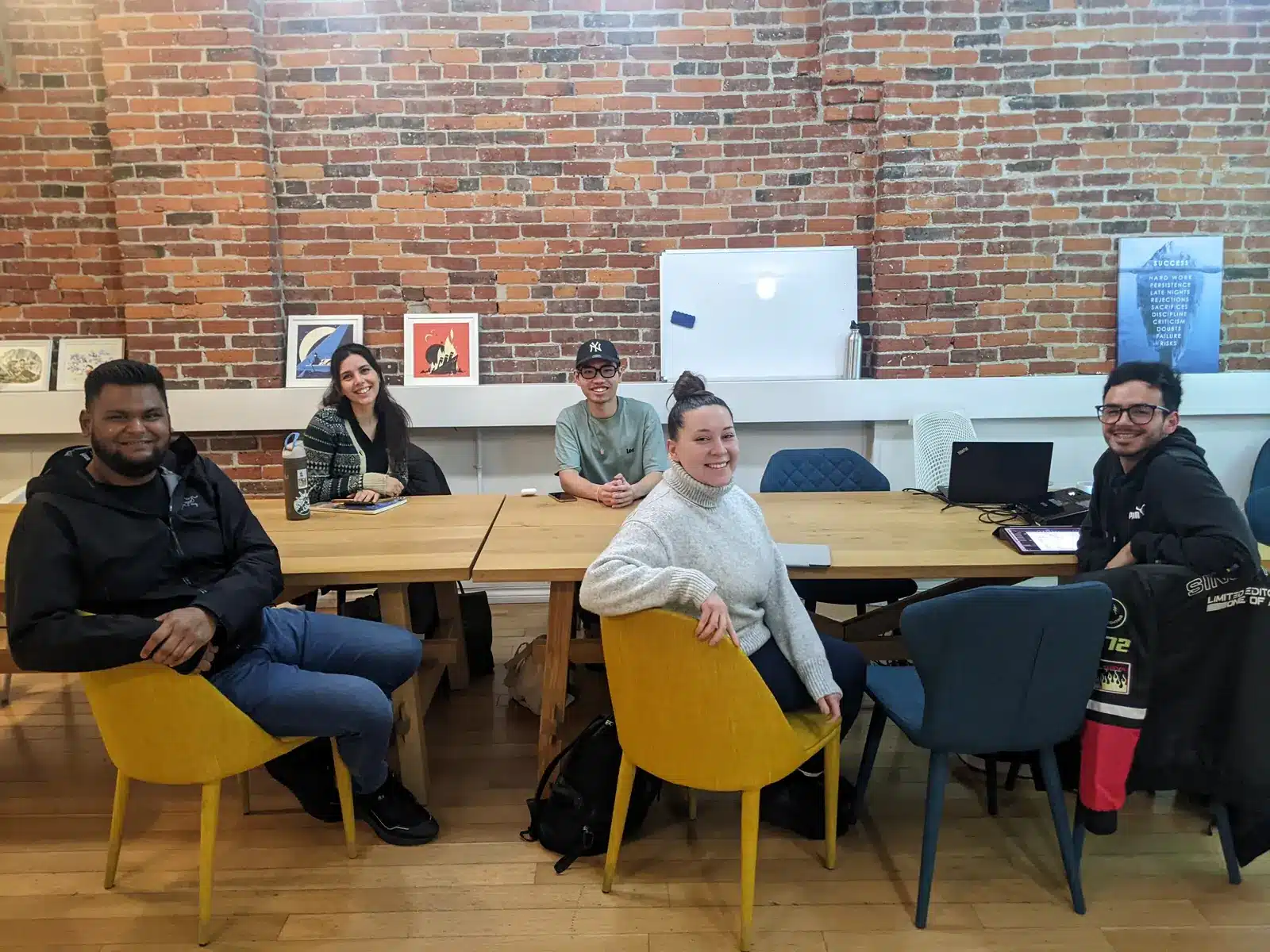
Learn French in Vancouver has prepared adults for the TEF and TCF in Gastown and online since 2017. Section A is practised live in class, with a teacher playing the advertiser and pushing back the way an examiner does.

In our TEF/TCF prep classes, groups of max 14 meet twice a week for 90 minutes, so everyone speaks in every class, and mock exams cover every section. Live classes aren't recorded: class time is for speaking.
The right program depends on where you start:
- B1 or higher with a test date: the TEF/TCF prep program above (3 months targets CLB 5, 6 months targets CLB 7).
- Starting from zero: our 12-month TCF exam preparation in Vancouver program, six months of foundations then six months of exam prep. Zero to CLB 7 takes 12 months.
- Need extra speaking time before your date: add private French classes to your group work.
"Bonjour! I would like to thank Noelie and the Learn French team for making it possible for me to get the sufficient result of TEF exam. The profound teaching of the clé grammar end mocking tests - that is the path :)"