
Preparing for the TEF Canada exam is the decisive step for anyone proving French proficiency for Canadian immigration or career advancement, and the single most common mistake we see is starting the exam prep before the French underneath is ready to carry it.
This is our original preparation guide, rebuilt and updated. The core advice hasn't changed because it keeps being right: foundation first, exam prep second, with honest timelines for both stages and mock exams before any real booking.
If you're feeling lost about where to begin, this roadmap is the complete answer to the question we hear most from new students: how do I actually prepare for the TEF, and how long will it honestly take?
Why You Need a Solid Foundation Before TEF Prep
The TEF isn't a beginner's exam. It's a measurement instrument, and it needs something to measure. The Test d'Évaluation de Français assesses the French you have; it cannot conjure French you don't. Before exam-specific preparation makes sense, you need B1-level French (roughly CLB 4–5):
- Understand clear, standard speech on familiar topics
- Manage everyday conversations in French without rehearsal
- Write simple connected texts on familiar subjects
Starting TEF drills below B1 is like practicing free throws before learning to catch: the technique has nothing to attach to. Students who skip this stage plateau hard in the speaking and writing sections, then blame the exam for measuring accurately.
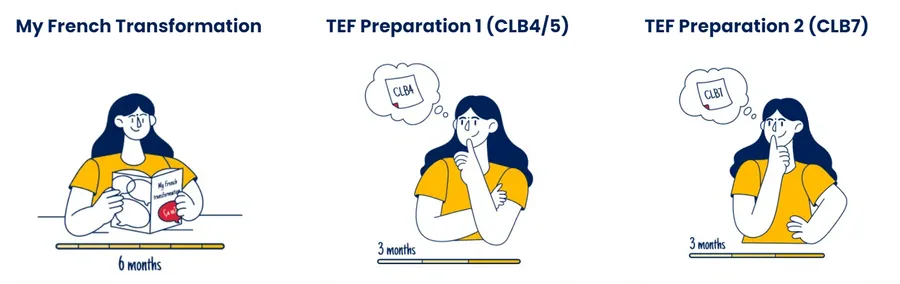
Reaching B1 from zero takes about 6 months of structured learning. That's not a sales line. It's the timeline that repeats across our 4,500+ students since 2017, and shortcuts reliably cost more time than they save. The good news: the foundation stage is also the fun stage, where French stops being an abstraction and becomes a language you actually use.
Stage One: Building the Foundation
The French Transformation program is our 6-month foundation stage, built for beginners and near-beginners. By design, it develops all four skills the TEF will eventually measure:
- Speaking: basic conversations, weekly speaking challenges, confidence before technique
- Listening: understanding clear speech through podcasts, films, and live classes
- Reading: simple texts on travel, culture, daily life
- Writing: notes, short emails, and the vocabulary base everything else grows from
Two live 90-minute classes a week with native French teachers from France and Quebec, max 14 students: because the TEF's hardest sections are the productive ones, and production needs a human listening, correcting, and pushing back.
By the end of the program you're not exam-ready. You're language-ready, which is the prerequisite the exam prep stage builds on.
When Should You Start TEF Exam Prep?
At B1, and not before. Reaching that threshold is what makes the drills productive. From there, the prep window depends on which CLB level your pathway needs:
| Your target | CLB level | Prep time from B1 |
|---|---|---|
| Some PR streams, Francophone Mobility | CLB 4–5 | 3 months |
| Express Entry points territory | CLB 7 | 6 months |
Add the foundation stage and the full picture from zero matches our standing rule: 12 months to CLB 7, six months building the French and six months aiming it at the exam. Every honest school in this field quotes roughly the same arithmetic.
What Does TEF Canada Exam Preparation Involve?
Exam prep is a different discipline from language learning: the French you have, aimed at the precise format the exam uses. A candidate with strong French and no format training routinely scores a full CLB level below their true ability; preparation closes that gap. The work breaks into four streams:
- Listening practice on real-life French conversations at native speed, played once with no replay, with accents from France and Quebec both. The exam draws on either.
- Speaking practice against real TEF oral prompts, timed, with the two-part structure examiners expect: obtaining information, then persuading.
- Reading strategy for dense texts under time pressure: skimming, scanning, and question-first reading.
- Writing training on the exam's two tasks, from structure templates to the connectors that hold a formal letter together.
The infrastructure around it matters as much as the drills: mock exams that simulate the real test environment, one-on-one feedback on speaking and writing, and timing strategy for every section. Mock exams scored by teachers who know the marking grid are the single highest-value hour of any prep program.
For section-by-section depth, our guides to Expression Orale and the other three skills go further than any overview can.
Should You Take the TEF or the TCF?
Both exams are accepted by IRCC, test the same four skills, and convert to the same CLB levels, so this choice matters less than candidates fear. The differences are in format and rhythm: question counts, section lengths, and interface.
Our advice: decide at the end of your foundation stage, not the start. By B1 you'll have met both formats in practice materials, and one will simply feel better in your hands. Our TEF vs TCF comparison lays out every difference side by side, section by section.
What you shouldn't do is switch mid-preparation. The exams reward format familiarity, and six months of TEF-shaped practice is an asset the TCF can't inherit.
Your Roadmap: The Complete Timeline
The whole route on one page:
- Months 1–6: foundations. Zero to B1 through structured classes. Skippable only if a level test says you're already there.
- Month 6: the level check. Confirm B1 honestly with a real assessment; choose TEF or TCF; book nothing yet.
- Months 7–9: core exam prep. Formats, timing strategies, first full mock exams. CLB 4–5 candidates typically finish here.
- Months 10–12: the CLB 7 push. Advanced preparation, weekly mocks, and section surgery on whichever skill is capping your score.
- Exam month. Book when mock scores hit target consistently, not hopefully. Results arrive within weeks, ready for your application.
The roadmap flexes at the edges, an intensive schedule can compress the prep stages somewhat, and private lessons can target a single stubborn section, but the sequence itself doesn't change. Foundation, preparation, evidence, exam.
What Does Exam Day Actually Look Like?
Knowing the shape of the day removes half its stress:
- Bring valid identification and arrive early: test centres are strict about both, and a calm, unhurried arrival is worth real points in the first section.
- The sections run long. Plan for several hours including administration; eat beforehand and treat breaks as recovery, not review.
- The speaking section is a conversation, not a speech. The examiner wants interaction: questions, reactions, repair when you stumble. Practiced candidates treat it like a role-play they've done twenty times, because they have.
- One bad section doesn't end the day. Scores are per-skill; recover and take the next section fresh.
Students who've done full mock exams under real timing describe the actual exam with the same word: familiar. That familiarity is the entire point of the rehearsals. Nerves lose their grip on a room you've already sat in twenty times.
What Are the Common TEF Preparation Mistakes?
The ones that cost real candidates real months:
Starting exam prep too early. Below B1, TEF drills teach test anxiety, not French. Foundation first. It's faster in total.
Ignoring the productive skills. Reading and listening improve alone; speaking and writing don't. The exam weighs all four, and CLB levels are capped by your weakest.
Preparing for "French" instead of the format. The TEF rewards knowing its structures: the official TEF Canada pages detail the sections, and your prep should mirror them exactly.
Booking the exam as motivation. A booked exam before mock scores support it converts fees into stress. Book from evidence.
Going it alone past B1. Self-study built your base; exam technique, feedback, and timing need teachers who know the grid. The candidates who lose the most months are usually the strongest self-studiers. The habit that built their French convinces them it can also aim it, and the exam disagrees.
Why Prepare with Learn French in Vancouver?
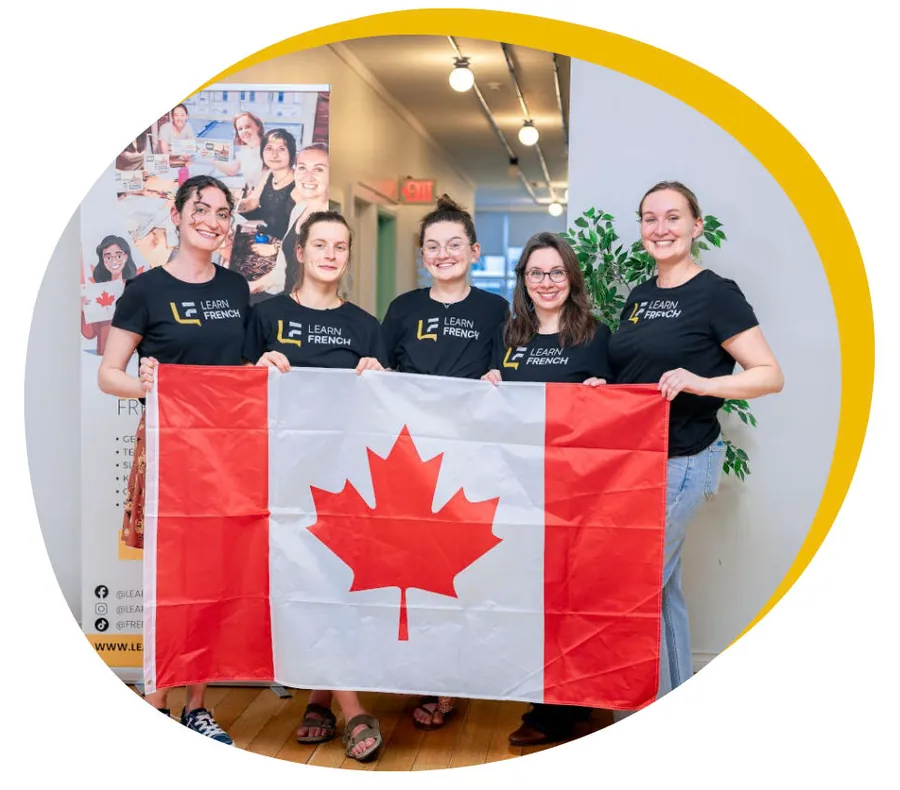
Because the whole path lives under one roof: foundation program, exam preparation, and native French teachers from France and Quebec who prepare TEF candidates every single week, in Vancouver and online across Canada. Learn French in Vancouver has taught 4,500+ students since 2017, many of them from zero to the exact score their immigration file needed.
The continuity matters more than it sounds: teachers who watched you build the French know precisely which habits to sharpen for the exam, and nothing gets lost in a handover between schools.
Prefer one-on-one intensity, or a schedule that flexes around shift work and family? Private TEF preparation wraps the same method around your calendar and concentrates on your weakest sections.
"Bonjour! I would like to thank Noelie and the Learn French team for making it possible for me to get the sufficient result of TEF exam. The profound teaching of the clé grammar end mocking tests - that is the path :)"