"How long does it take to learn French?" is the first question almost every future student asks us. Most answers on the internet are either too vague ("it depends!") or dishonestly short ("fluent in 30 days!"). Learn French in Vancouver has taught 4,500+ students since 2017, so we can give you the real numbers instead.
The short version: 6 months from zero to conversational French, and 12 months minimum from zero to CLB 7. That is the level most Express Entry candidates need for the big points. Anyone promising CLB 7 in less time is selling a course, not a timeline.
The rest of this guide is the long version: what changes those numbers, which factors you control, and what each level actually feels like from the inside.
One thing before the numbers: "learning French" is not one finish line. Ordering dinner in Paris, holding a conversation, passing the TEF, and working a French job are all different goals. An honest timeline names the goal first.
So How Long Does It Take to Learn French, Really?
From zero, plan on 6 months to conversational French and 12 months to CLB 7. These are the timelines we have watched play out across thousands of students since 2017, and the ones we build our programs around:
| Starting point | Goal | Realistic time | Path |
|---|---|---|---|
| Zero | Conversational (CLB 4–5) | 6 months | French Transformation |
| Zero | CLB 5 (Francophone Mobility) | 6–9 months | Transformation + short TEF prep |
| Zero | CLB 7 (Express Entry) | 12 months minimum | 6 mo foundations + 6 mo exam prep |
| B1 / intermediate | CLB 5 | 3 months | TEF/TCF Prep |
| B1 / intermediate | CLB 7 | 6 months | TEF/TCF Prep (6-month) |
Notice what is not on this table: a zero-to-CLB 7 path under a year. It is 12 months. Schools that promise less set students up to re-book exams, re-pay fees, and miss application windows they had planned their year around.
What Actually Changes Your Timeline?
Speaking more than one language pays off in careers, travel, and daily life. How fast you get there varies a lot between learners. Four factors explain most of the difference, in order of impact:
Motivation and Past Experience
How motivated are you, and why? Career, immigration, travel, family: a concrete reason keeps you studying in week 11, when the excitement has worn off. Motivation is the strongest predictor we see across thousands of students.
Have you already learned another language, any language? You will move faster. You know how you learn, flashcards or immersion, morning or night, and that method carries over. If the language was Spanish, Italian, or Portuguese, you will move faster still.
Your Native Language
English speakers start with an advantage: roughly a third of English vocabulary has French roots, so thousands of words will look familiar from day one. Nation, important, and restaurant barely need translating.
Speakers of Spanish, Italian, or Portuguese get an even bigger head start. Those languages share grammar structures and near-identical vocabulary with French, so the early levels go faster. Whatever your first language, use the overlap you do have from day one.
Time Investment and Commitment
The math of language learning is simple: hours in, ability out. Our 6-month timeline assumes two 90-minute classes a week plus daily contact with French, like a podcast on the commute or an episode with subtitles.
Busy season at work? A lighter week is fine. A zero week is expensive, because lost momentum costs double to rebuild. That is why flexible scheduling exists, including private lessons that move with your calendar.
How Often You Practice
Frequency beats duration: 20 minutes daily beats 3 hours on Sunday. Languages are learned through repetition. The brain keeps what it meets often, not what it met once in one long session.
The trick is attaching French to habits you already have: coffee and a French YouTube video, dinner and an episode, transit and a podcast. Habits beat willpower over 6 months.

What Do the French Levels Actually Mean?
The CEFR scale (A1 to C2) is used worldwide. Canada's CLB scale measures the same progression with a different ruler. Knowing where you sit on them turns "learn French" into a measurable project. Here is what the levels feel like:
| Level | CLB | What you can actually do |
|---|---|---|
| A1 | CLB 1–3 | Introduce yourself, order, survive politely |
| A2 | CLB 4 | Handle daily routines, citizenship-level French |
| B1 | CLB 5–6 | Hold real conversations; Francophone Mobility territory |
| B2 | CLB 7–8 | Argue, negotiate, work. Express Entry points territory |
| C1+ | CLB 9+ | Professional fluency and beyond |
Two milestones matter most for anyone in Canada: CLB 4 (the French level citizenship requires) and CLB 7 (the level that earns the big Express Entry points). Our CLB 4 citizenship guide covers the first in depth, and IRCC's language requirements page is the official word on how scores map to programs.

What Does the 12-Month Path to CLB 7 Look Like?
The 12-month path is 6 months of foundations followed by 6 months of exam preparation. It is the timeline most of our immigration students follow. Here is the honest month-by-month shape:
- Months 1–3: foundations. Present tense, survival vocabulary, pronunciation habits that will carry everything later. It feels slow, but everything after it is built on this.
- Months 4–6: conversation arrives. Past and future tenses, opinions, real exchanges with classmates. This is the level where French stops being homework and starts being fun.
- Months 7–9: the exam transition. TEF/TCF formats, timing strategy, and a useful discovery: exam French is its own skill, and you can train it.
- Months 10–12: mock exams, scored and reviewed by teachers who know the marking grid, until the real exam room feels familiar. Then the booking, and the score.
Students who start at intermediate join the path at month 7. That is the 6-month TEF prep track in practice. Either way, the finish line is the same: a score report that turns your French into Express Entry points, and a language you keep for life.
How Can You Learn French Faster?
You can't cheat the hours, but you can stop wasting them:
- Take structured classes. Self-taught learners often get stuck at "understands but can't speak". A live teacher makes you speak, answers the questions apps can't, and corrects errors before they become habits.
- Speak from week 1. Badly, bravely, daily. Speaking is the skill; everything else is preparation for it.
- Make French part of your day. Set your phone to French, play French music, and watch one show at a time. Our guides to French series and films turn screen time you already spend into study time.
- Set level deadlines. "Finish Level 2 by June" beats "get better at French" every time. Levels with dates are how our whole program is structured, for exactly this reason.
- Don't skip the boring foundations. Conjugation drills feel slow in month 1. They are exactly what makes month 4 feel fast.
What Slows Learners Down?
The common traps, so you can step around them:
The app-only plateau. Apps are good supplements and bad main teachers. A streak measures loyalty, not ability, and an app cannot correct your pronunciation. Pair any app with real speaking.
Perfectionism. Waiting to speak until it's flawless means never speaking at all. French speakers would rather hear your imperfect French than your perfect English. The attempt itself is a compliment.
The intermediate dip. Around B1, progress feels slower because gains shift from new words to nuance. Every learner hits this dip. The ones who push through a few more weeks come out conversational.
Fear of the phone call. Phone French is the hardest listening there is: no faces, no gestures, no lip-reading. Don't measure your level by it, and don't avoid it forever either.
Starting over, repeatedly. The person who has "started French 3 times" has done Level 1, 3 times. A continuous 6 months beats 3 broken years. Pick a window, protect it, and finish.
How We Get Students There
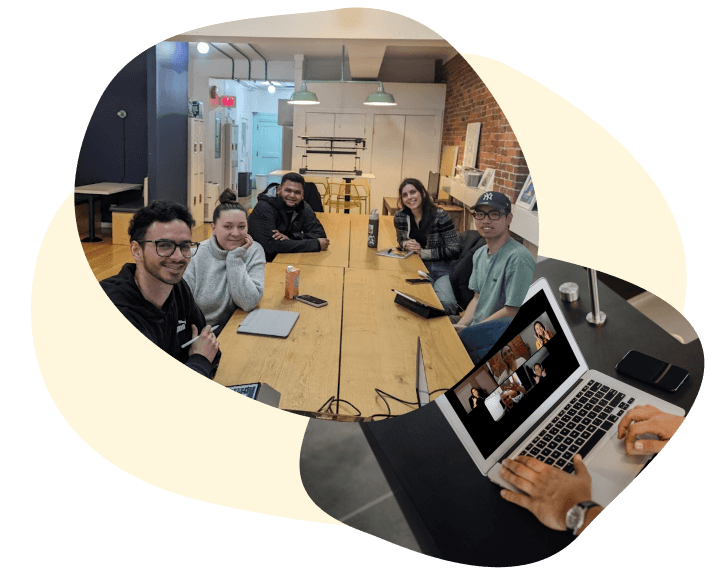
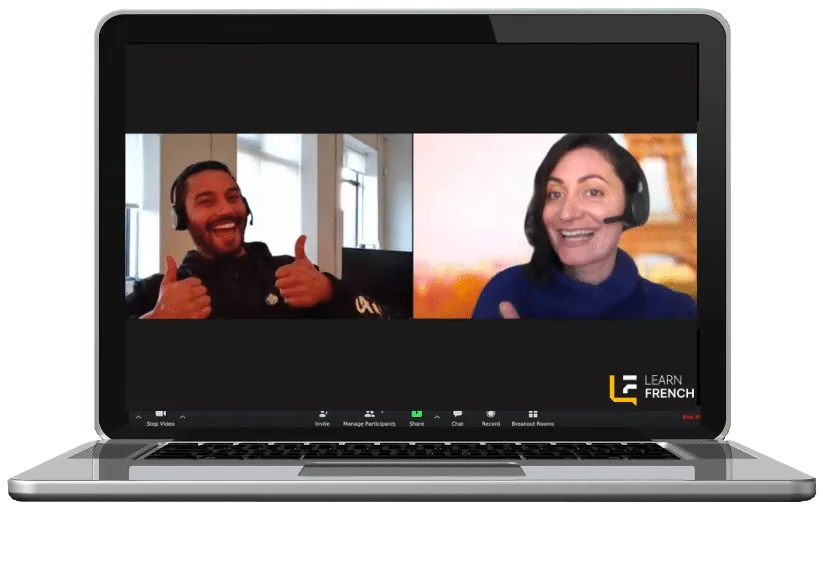
The French Transformation program is our working answer to the timeline question: 6 levels in 6 months, two live 90-minute classes each week with native French teachers from France and Quebec, max 14 students per class so everyone genuinely speaks in every session. It takes you from zero to conversational, in person in Vancouver or online across Canada.
Aiming at CLB 7 for Express Entry? The second 6 months move into TEF/TCF preparation: exam technique, mock tests scored by teachers who know the marking grid, and the section-by-section strategy that turns your French into points instead of near-misses.
Prefer your own pace or schedule? Private lessons flex around your life while keeping the same structure and the same native teachers. The timeline holds either way. The only change is whose calendar it runs on.
"Stumbled upon Learn French when looking for French-learning options geared towards proficiency tests and was so happy to find this place! Currently taking their French Transformation course (6 months of French learning and 6 months of exam prep, 2x a week for 1.5hrs) with Maï and could not be happier. Maï is clearly an experienced instructor - very straightforward and patient."